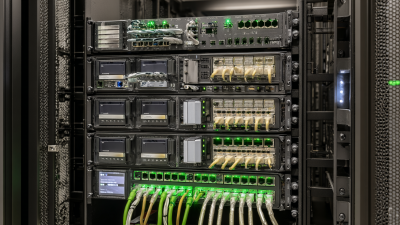
Choosing the top China Juniper Qfx Switches suppliers requires more than comparing online prices. Buyers should examine authorization, product origin, technical capability, and after-sales support. A polished website proves little. Supplier credibility appears through verifiable company records, responsive engineers, and consistent documentation.
Look for suppliers that can provide genuine Juniper equipment with clear serial-number records and traceable invoices. Confirm whether each switch is new, refurbished, or previously deployed. Ask for detailed specifications, including port density, uplink options, Junos compatibility, power supplies, and licensing conditions. Small details matter. A missing accessory can delay installation.
Practical evaluation should include sample inspection and testing. Check the chassis label, cooling fans, transceiver compatibility, and console access before shipment. Request photographs of the actual unit, not only catalog images. Reliable suppliers should explain lead times, packaging standards, warranty coverage, and return procedures in writing. Their engineers should also understand VLANs, virtual chassis design, routing policies, and data center deployment requirements.
Pricing still matters, but unusually low quotations deserve careful review. They may reflect older hardware, incomplete licenses, or uncertain sourcing. This is where buyers need to pause. No supplier is perfect, and communication gaps can appear during urgent projects. A balanced comparison should therefore consider response speed, test evidence, replacement support, and long-term reliability. This guide reviews leading China-based suppliers through those practical criteria, helping network managers make a more informed and defensible purchasing decision.

High-performance QFX switches are designed for demanding data-center networks. They commonly support Layer 2 and Layer 3 routing, high-density ports, and fast uplinks. Their compact designs help reduce rack space and power use. Many models support 10G, 25G, 40G, and 100G connections. This flexibility suits both growing offices and large server rooms.
Their core application is the spine-leaf network. Leaf switches connect servers, storage systems, and security devices. Spine switches provide fast paths between leaf layers. These switches also support workload mobility, virtualization, cloud access, and east-west traffic. Automation tools can reduce manual configuration errors. Real-time telemetry helps engineers notice packet loss, congestion, or unusual latency. However, capacity planning is not always simple. A port may look fast, yet oversubscription can still slow busy applications.
Tips: Check port speeds, buffer capacity, airflow, and licensing requirements before purchase. Request verified test results from China-based suppliers. Confirm serial numbers, warranty terms, software support, and delivery records. Ask for configuration guidance, not only a low price. A small lab test can reveal compatibility problems early. Test real traffic patterns when possible. That step is often skipped.

Modern data-center switching platforms support multiple standardized Ethernet speeds to connect servers, storage systems, leaf-spine fabrics, and high-performance computing workloads. The chart highlights widely deployed link rates and their common application scenarios.
Ethernet speeds shown are standardized and commonly used in data-center networks. Lower-speed links are frequently used for server and management connectivity, while 100 Gb/s and 400 Gb/s links are generally used for high-density uplinks, spine-leaf fabrics, storage traffic, and AI or high-performance computing clusters.
Selecting a China-based QFX switch supplier requires more than comparing prices. Check the supplier’s experience with compatible switching platforms, routing features, port density, and optical modules. Request detailed datasheets, test reports, and serial-number traceability. A reliable supplier should explain throughput, latency, VLAN support, and power consumption clearly. Vague answers are warning signs.
Evaluate product quality through a sample unit or controlled pilot. Test boot time, interface stability, cooling noise, and configuration recovery. Ask for firmware policies, warranty coverage, replacement procedures, and realistic lead times. Independent certifications and documented factory inspections add credibility. However, no checklist is perfect. A clean document can still hide weak support after delivery.
Tips: Compare at least three suppliers. Verify references from similar network projects. Use written acceptance tests, including traffic loads and failover checks. Confirm whether technical support operates during your business hours. Review packaging details too; damaged ports or loose transceivers can create expensive delays. A small pilot is worth the effort.
China’s leading suppliers of QFX switches are usually evaluated through technical traceability, not price alone. Shenzhen and Shanghai trading networks offer broad inventories, refurbished units, and factory-sealed equipment. However, listing quality varies sharply. Buyers should request serial-number photos, manufacturing dates, port layouts, power details, and firmware compatibility before payment.
IDC’s Worldwide Ethernet Switch Market Tracker reported approximately 20% year-over-year revenue growth in the second quarter of 2024. The market reached roughly 10 billion dollars during that period. Dell’Oro Group also identified cloud expansion and AI infrastructure as major switching demand drivers. These figures explain China’s growing supplier base, but they do not prove every seller is reliable. A low quotation can hide missing optics, limited testing, or unclear warranty terms. No checklist is perfect.
Tips: Ask suppliers for a live video test. Check every port, fan, power module, and management interface. Compare the switch’s hardware revision with your planned software release. Require a written DOA policy and replacement timeline. Independent inspection is useful for larger orders. My own reflection is simple: product photos create confidence too easily. Evidence matters more. Choose suppliers that provide consistent documentation, responsive technical answers, and verifiable export records.
When comparing China-based suppliers of QFX-class data-center switches, product quality deserves more than a specification sheet. IDC reported 18.8% year-over-year growth in worldwide Ethernet switch revenue during the second quarter of 2024. That growth increases pressure on factories and component supply chains. Request burn-in records, thermal test results, port-error statistics, and optical compatibility lists. A practical evaluation should include at least 48 hours of traffic testing. Check packet loss, fan noise, boot time, and firmware stability.
Pricing should be measured through total cost, not unit price alone. Compare transceiver requirements, power consumption, licensing, freight, spare units, and technician time. A low quotation may hide expensive optics or restricted software features. It happens often. Warranty terms also need careful reading. Confirm whether coverage lasts three or five years, who pays return freight, and whether advance replacement is available. Request a written RMA timetable. Verbal promises are weak evidence.
Support quality becomes visible during failure, not during a sales call. Uptime Institute’s 2024 outage analysis found that 54% of reported incidents caused losses above 100,000 US dollars. Fast escalation therefore has measurable value. Ask for local-language documentation, 24-hour response targets, configuration assistance, and firmware security procedures. Independent references matter more than polished brochures. I would also test one sample before a full purchase, because published performance figures rarely show long-term heat, dust, or interoperability problems.
Choosing the right QFX switch supplier in China requires more than comparing prices. A polished website proves little. Request a current company license, factory address, product datasheets, and recent shipment references. Check whether the supplier is a manufacturer, authorized distributor, or trading intermediary. This distinction affects warranty support and traceability.
Ask for a sample unit before placing a large order. Test port speeds, switching capacity, latency, stacking features, power consumption, and operating temperature. Confirm firmware origin, serial-number records, and compatibility with your network management system. A reliable supplier should provide inspection reports, packaging photos, and a clear replacement process. Request certification documents, but verify them through the issuing organization when possible. Some documents may be outdated.
Supplier evaluation should also include technical communication. Send a simple network diagram and ask for a written configuration proposal. Strong engineers will identify missing optics, power modules, licenses, or airflow requirements. They will also explain limitations instead of promising everything. That matters during deployment.
Price is only one variable. Calculate total cost, including freight, spare units, testing, support, and possible import delays. Review payment terms carefully. Contact two or three previous customers, preferably with similar traffic demands. Their feedback may reveal slow responses or inconsistent hardware batches. A small pilot order is safer than trusting attractive claims. Even experienced buyers can overlook firmware support, and that mistake becomes expensive later.
| Evaluation Dimension | What to Verify | Acceptable Evidence or Benchmark | Suggested Weight | Risk if Unverified |
|---|---|---|---|---|
| Legal Business Identity | Confirm that the supplier is legally registered and can issue valid commercial documents. | Verify the business license, registered address, legal representative, tax information, and consistency between the contracting entity and payment beneficiary. | 10% | High Payment disputes, contract enforcement problems, or fraudulent documentation. |
| Supply-Chain Role | Determine whether the supplier is an authorized channel partner, distributor, reseller, integrator, or independent trader. | Request a current authorization letter where applicable, distribution agreement, supply-chain explanation, and proof of procurement source. | 12% | High Limited warranty support, uncertain product origin, or inconsistent availability. |
| Product Authenticity | Check that the offered switches, line cards, optics, power supplies, and accessories are genuine and match the quotation. | Require clear photographs of labels and serial numbers, packing-list details, model configuration, and a pre-shipment inspection or serial-number verification process. | 15% | Critical Counterfeit, remarked, incompatible, or incorrectly configured equipment. |
| Condition and Grading | Identify whether each item is new, refurbished, used, open-box, or factory-sealed. | The quotation and purchase order should state condition, manufacturing date where available, cosmetic grade, operating hours if known, and included accessories. | 10% | High Unexpected failure rates, missing components, or disagreement over acceptance criteria. |
| Technical Compatibility | Confirm compatibility with the required network architecture, software release, interfaces, optics, routing features, and management tools. | Use a written bill of materials and compatibility matrix covering port speeds, transceiver types, uplink requirements, power input, rack dimensions, software features, and license dependencies. | 15% | Critical Equipment may not interoperate with the existing network or may require unplanned licenses. |
| Testing and Inspection | Assess whether the supplier performs functional testing before shipment. | Request a test report covering boot status, interface operation, fan and power-supply status, software information, optical-port checks, and burn-in duration when applicable. | 10% | High Dead-on-arrival equipment and time-consuming return procedures. |
| Warranty and RMA | Review warranty duration, coverage, response time, replacement policy, and responsibility for shipping costs. | Obtain a written warranty and RMA procedure that defines fault evidence, troubleshooting support, replacement timing, repair options, and exclusions. | 12% | High Long service interruptions and unclear responsibility for defective units. |
| Delivery Capability | Evaluate stock accuracy, lead-time reliability, export experience, and packaging standards. | Ask for a stock confirmation dated close to purchase, estimated dispatch date, export documentation sample, packing method, carton dimensions, and shipment tracking procedure. | 8% | Medium Project delays, customs issues, or transit damage. |
| Commercial Transparency | Compare the total landed cost rather than only the unit price. | The quotation should separate equipment, accessories, testing, packaging, freight, insurance, taxes, duties, payment fees, and any software or service charges. | 5% | Medium Hidden charges and inaccurate project budgeting. |
| Reference and Track Record | Assess experience with comparable enterprise networking projects without relying solely on online reviews. | Request verifiable customer references, anonymized delivery records, project scope, after-sales examples, and evidence of successful deployments in similar environments. | 3% | Medium Insufficient evidence of service quality or technical competence. |