What is Juniper SRX300 and How Does It Work?
In the current landscape of cybersecurity, organizations face unprecedented challenges. Cyber threats are evolving rapidly, increasing the demand for robust security solutions. According to a report by Gartner, the global security services market is projected to exceed $145 billion by 2025. Within this growing market, the Juniper SRX300 stands out as a reliable firewall and security device.
The Juniper SRX300 addresses various network security requirements for small to medium-sized enterprises. It offers integrated threat intelligence and advanced security features. In a world where businesses are increasingly targeted by cyberattacks, using such devices is pivotal. However, as enterprises adopt new technologies, they must also reconsider the effectiveness of their security measures.
While the Juniper SRX300 offers a range of features, there are areas that require further assessment. Users should continuously analyze the effectiveness of the SRX300 in the context of their unique environments. Balancing security and usability is crucial. Every decision in cybersecurity comes with trade-offs, and the Juniper SRX300 is no exception. Businesses must stay vigilant, ensuring their measures evolve with the changing threat landscape.
What is the Juniper SRX300: Overview and Key Features
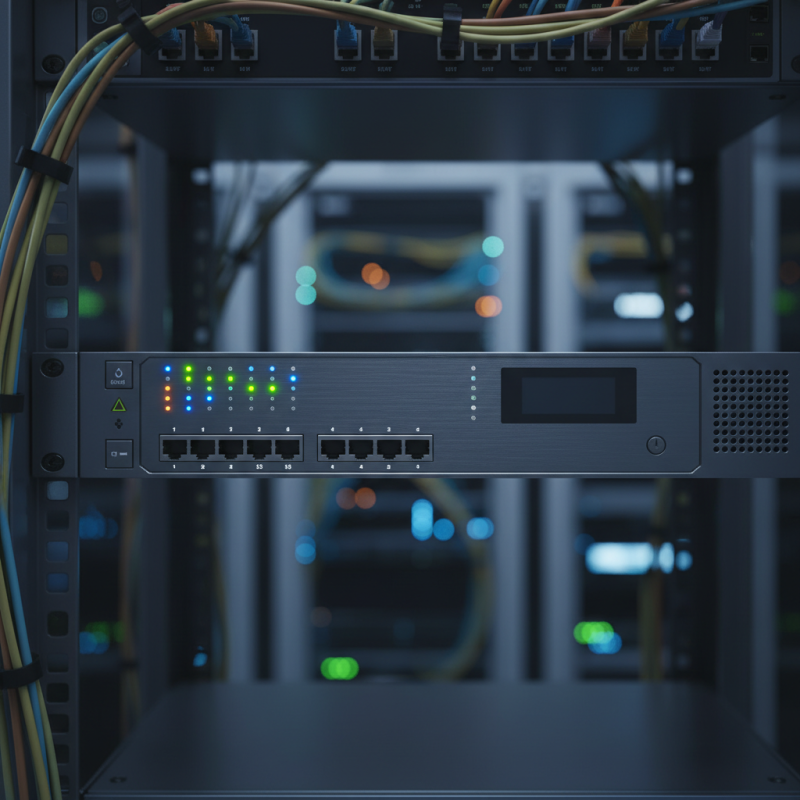
The Juniper SRX300 is a versatile security device designed for small to medium-sized networks. It provides a robust firewall that safeguards sensitive data against cyber threats. This device is equipped with multiple security features aimed at ensuring smooth and safe internet connectivity. The integrated VPN capabilities allow remote users to connect securely to the network.
One of the standout features of the SRX300 is its ability to handle both wired and wireless connections. With support for various interfaces, users can easily configure the device to fit their network needs. However, some users may find the initial setup confusing. The management interface is user-friendly, yet learning curves often exist.
Another notable aspect is its advanced threat prevention. The SRX300 continuously monitors traffic and can act swiftly against suspicious activities. However, it requires constant updates and may struggle with newer threats. Regular reviews and system checks are essential to maintain optimal performance. The device also includes application visibility, but this may not always provide the granular insights some IT teams desire. Overall, the SRX300 displays promising features but requires ongoing attention to navigate challenges effectively.
Understanding the Architecture of Juniper SRX300 Firewall
The architecture of the SRX300 firewall is crucial for modern network security. It integrates multiple functions, including intrusion prevention, threat intelligence, and application visibility. This multi-threat approach can provide a comprehensive security posture that adapts to evolving threats.
Market research highlights that over 60% of organizations believe firewall performance is critical in preventing attacks. The SRX300 accommodates this belief with its scalable design. It can manage both small and medium-sized networks effectively. The firewall's capacity to handle high throughput and thousands of concurrent sessions is substantial.
However, some devices struggle with complexity in configuration. Users often report challenges during initial setup. This complexity can lead to misconfigurations, risking security postures. Continuous learning and updates in management skills are essential. Regular assessments help in refining security strategies and using the SRX300's full capabilities. Such reflection can lead to enhanced security measures, ensuring that organizations remain vigilant against cyber threats.
Performance Metrics: Throughput and Connection Capacity of SRX300
The Juniper SRX300 is a versatile security platform designed for small to medium-sized businesses. When evaluating its performance metrics, two key aspects stand out: throughput and connection capacity. The SRX300 achieves a maximum firewall throughput of approximately 1 Gbps. This figure is critical for organizations that demand quick responses to potential threats while maintaining operational efficiency.
In terms of connection capacity, the SRX300 supports up to 64,000 simultaneous sessions. This is an essential metric for businesses that's rapidly growing. High session capacity ensures that multiple users can access resources without performance degradation. However, real-world performance can vary based on usage scenarios and network conditions.
**Tip:** Always monitor your network's performance closely. Use built-in analytics tools to track bandwidth use. Regularly revisiting your configurations can help optimize performance.
Understanding the metrics behind the SRX300 is vital. Many security appliances promise high throughput but fail to deliver under heavy loads. It is crucial to conduct real-world testing to gauge performance accurately. Additionally, assessing how connection capacity aligns with user growth can prevent issues before they arise.
Security Capabilities: Threat Prevention and Unified Security Policies
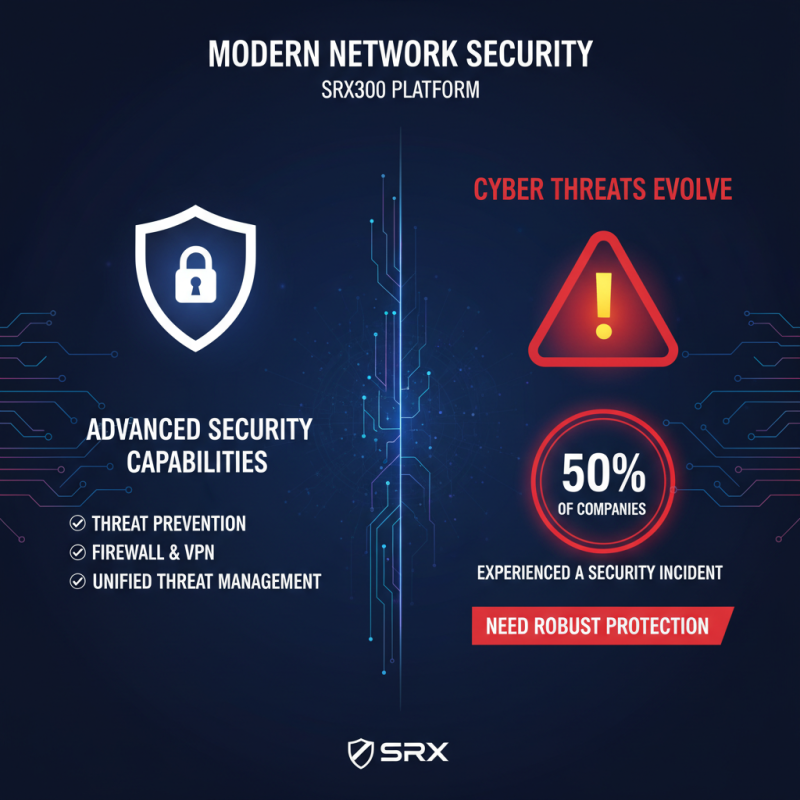
The SRX300 platform offers advanced security capabilities essential for modern networks. With cyber threats evolving rapidly, organizations face constant danger. In fact, studies reveal that 50% of companies experienced a security incident in the past year. This highlights the need for robust threat prevention systems.
Unified security policies provided by the SRX300 allow for streamlined management. By integrating firewall, intrusion prevention, and web filtering, it simplifies operations. More importantly, a unified approach helps reduce the likelihood of security gaps. According to industry reports, businesses adopting integrated security measures see a 30% reduction in breaches.
However, challenges remain. Many organizations struggle to implement comprehensive policies across all systems. Without proper training, teams may misconfigure settings. Consistent review and updates are crucial. The responsibility of maintaining security lies with everyone, not just IT. Regular assessments can help ensure policies are effective and adaptive to new threats.
Deployment Scenarios: Use Cases for Juniper SRX300 in Networks
The Juniper SRX300 is a powerful security gateway that has found its way into various deployment scenarios. Organizations often leverage it to enhance network security and streamline operational efficiency. One common use case is in small to medium-sized businesses. These businesses require robust protection against growing cyber threats while managing limited IT resources.
In these environments, the SRX300 serves dual purposes. It acts as a firewall, effectively filtering unwanted traffic, and as a VPN concentrator, enabling remote access for employees. According to recent industry reports, over 60% of cyberattacks target small businesses, emphasizing the need for reliable security solutions like the SRX300. The system is capable of managing multiple site-to-site VPNs, thereby facilitating secure communications across various locations.
Another notable scenario involves branch offices. Here, the SRX300’s ability to integrate security with networking simplifies management. Remote offices can achieve the same level of security as headquarters without significant overhead. However, company leaders must recognize that deploying such technology requires ongoing monitoring and updates. Reports show that nearly 30% of organizations fail to patch vulnerabilities in a timely manner. This negligence can lead to gaps in security, making these use cases less effective if not managed properly.
Traffic Throughput of Juniper SRX300 in Different Scenarios