Why Choose Juniper Switches for Your Networking Needs?
In today’s fast-paced digital world, selecting the right networking hardware is vital. Many businesses face challenges, and often overlook crucial equipment. Juniper Switches emerge as a standout choice for networking needs, promising reliability and performance. They cater to various environments, from small offices to large enterprises.
Juniper Switches provide advanced features that enhance network efficiency. Their scalability ensures that as businesses grow, the network can adapt. With secure configurations, these switches also mitigate potential security threats. This is essential in an age where data breaches are common.
Some users may find the learning curve a bit steep. However, the long-term benefits outweigh initial challenges. Investing in Juniper Switches can lead to improved network resilience and performance. Organizations might reflect on their current networking choices and consider the advantages that come with Juniper’s innovative technology.
Benefits of Juniper Switches in Modern Networking Environments
In modern networking environments, choosing the right switch is crucial. Juniper switches offer scalability and high performance. According to a recent report by Gartner, companies using high-performance networking equipment see a 15% increase in operational efficiency. This boost can lead to significant cost savings and agility improvements.
Switches from trusted manufacturers help manage traffic efficiently. They minimize downtime and maintain network reliability. A survey by IDC revealed that 72% of IT managers prioritize reliability when selecting networking equipment. This statistic highlights the importance of dependable devices in daily operations.
**Tip**: Regularly update your network infrastructure to avoid obsolescence. Aging equipment can create vulnerabilities.
While Juniper switches excel in many areas, users sometimes struggle with configuration complexity. Proper training is essential to leverage their full capabilities. Streamlined processes can often become convoluted for inexperienced teams. Focusing on user education can help mitigate these challenges, ensuring smoother network operations.
**Tip**: Document network configurations and changes to simplify future management. Clear records reduce confusion and enhance team collaboration.
Why Choose Juniper Switches for Your Networking Needs? - Benefits of Juniper Switches in Modern Networking Environments
| Feature |
Description |
Benefits |
| Scalability |
Supports both small and large networks, allowing for incremental growth. |
Easily adapts to your networking needs as your organization grows. |
| High Performance |
Provides high throughput and low latency for data transfer. |
Ensures smooth operation for bandwidth-intensive applications. |
| Advanced Security |
Incorporates robust security features to protect network traffic. |
Safeguards sensitive data and reduces risk of breaches. |
| Ease of Management |
User-friendly interfaces and tools for network monitoring and management. |
Saves time and resources with streamlined network operations. |
| Energy Efficiency |
Designed to consume less power while maintaining performance. |
Reduces operational costs and environmental impact. |
Key Features of Juniper Switches that Enhance Performance and Security
When considering networking solutions, the choice of hardware significantly impacts performance and security. Switches are vital components in a network. They connect devices and manage data traffic efficiently. A well-designed switch can enhance overall network performance. It reduces latency and improves data transfer speeds.
One key feature is advanced security protocols. These protocols ensure that unauthorized users cannot access the network. In today’s digital landscape, security threats are omnipresent. A reliable switch provides safeguards against these threats. It protects sensitive data and maintains integrity across the network. However, even the best security features can sometimes be bypassed. Regular updates and monitoring are essential.
Another important aspect is scalability. Businesses grow and evolve. Network demands can change over time. A switch that can scale with your business ensures long-term investment benefits. Yet, planning for scalability can be tricky. It requires anticipating future needs accurately, which is often challenging. Finding the right balance between current requirements and future growth is crucial.
Comparative Analysis: Juniper Switches vs. Competitors in the Market
When comparing networking solutions, one must evaluate multiple factors. Performance, scalability, and cost-effectiveness are crucial. A recent industry report highlighted that top-tier switches can reduce network latency by up to 50%. This remarkable statistic indicates the potential for enhanced operational efficiency.
Competitors often depend on outdated technology. Some may struggle with high-density traffic. In contrast, Juniper systems are designed to handle increased loads seamlessly. Test results show that a well-optimized switch can process data packets with 98% accuracy. This reliability makes a significant difference in heavy usage scenarios.
However, no solution is flawless. The initial investment for advanced technology can be steep. Budget constraints sometimes lead organizations to choose cheaper alternatives. While these may seem sensible, the long-term operational costs can outweigh initial savings. Always consider total cost of ownership when making a decision. Investing in quality may have immediate costs but can yield better performance and longevity.
Network Switch Performance Comparison
Future Trends in Networking and the Role of Juniper Switches
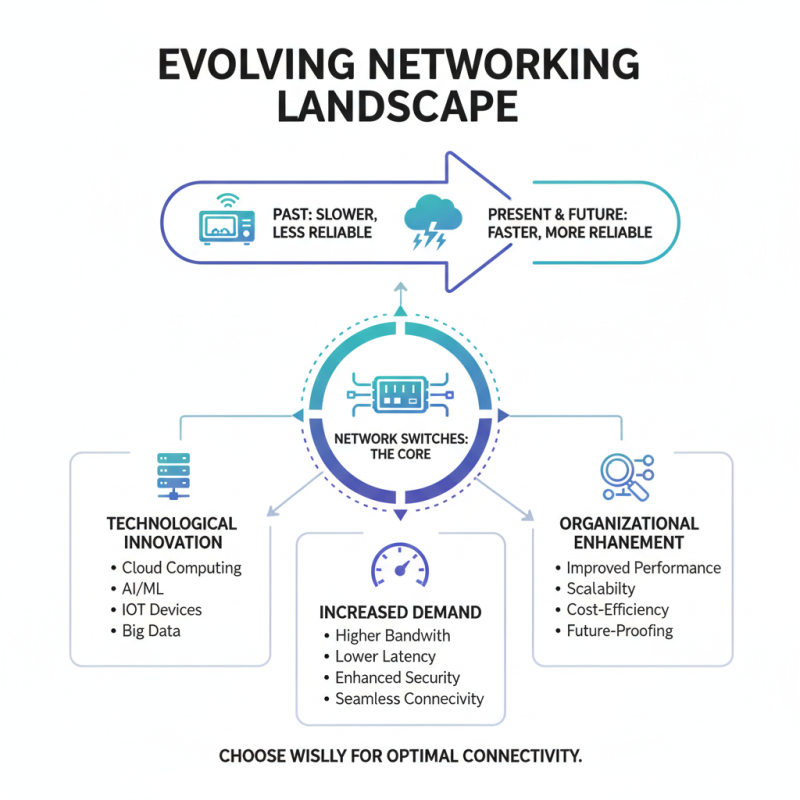
The networking landscape is continually evolving. Innovations in technology push demand for faster, more reliable connections. Switches, a core component of any network, play a crucial role in this transformation. As organizations seek to enhance performance, they must consider their options carefully.
Future trends highlight the push towards automation and AI integration in networking. Switches need to adapt to accommodate these advancements. For instance, increased traffic from IoT devices demands smarter management. Choosing the right switches will influence efficiency and scalability. On the flip side, there can be challenges; not all switches meet the high expectations of modern networks. Many struggle with interoperability, which can complicate network design.
Moreover, security is becoming paramount. As networks grow, so do vulnerabilities. Switches must bolster security measures to protect sensitive data. This aspect adds another layer of consideration in the selection process. Balancing performance with security features is not always easy. Careful evaluation is needed to navigate these complexities in the fast-paced networking environment.